The best audience and the sharpest targeting count for little if the ad itself does not land. Just how big this lever is shows in a widely cited study by Nielsen: creative quality accounts for around 56 percent of a digital campaign's sales impact, more than media placement, targeting and bid strategy combined. The creative is not the trimming, it is the single most important factor.
The good news: building an effective spot is neither as complicated nor as expensive as it used to be. This article shows how a good creative is built, why production has become much cheaper, and how to put the work you invest in one spot to use many times over.
The structure: problem, solution, call to action
A simple structure has proven itself for effective video advertising. Google captures it in its ABCD model, derived from analysing thousands of YouTube campaigns: Attract (earn attention), Brand (show the brand early), Connect (tie into the viewer's situation) and Direct (one clear call to action). In practice, a spot works in three steps.
Start with the problem. Open with the situation your audience knows, ideally in the first few seconds. A hook that names a concrete problem works measurably better than a generic opening or a long run-up. The viewer should recognise themselves immediately.
Then the solution. Show your product or offer as the answer to exactly that problem, concretely and vividly. A demonstrated use, a clear benefit, a visible result. Stick to one core message instead of explaining five benefits at once.
Finish with the call to action. Say exactly what the viewer should do, and only one thing. Several calls to action in one spot lead to fewer actions in total, not more. One goal per spot.
One more detail: show your brand early, not only at the end. And remember that the big screen gives you an advantage here. Unlike the fast-scrolled feed, where you are gone in a second or two, streaming spots run full-screen, with sound and non-skippable, and the completion rate is around 98 percent. So you already have the attention. The clear structure makes sure you use it. Why this attentive contact is so valuable is shown in the comparison of the media quality of streaming and social.
Create your spot easily!
Book a demoWhy good creatives are no longer so expensive
A commercial used to mean an agency, a film crew and a five-figure budget almost by default. That has changed fundamentally. AI-powered tools and modern production software have sharply reduced the cost and, above all, the time a spot takes.
How quickly this is taking hold shows in the IAB's Digital Video Report from 2025: generative AI was already involved in around 22 percent of video ad creatives in 2024, and its share is expected to rise to about 40 percent by 2026. Notable for smaller companies: according to the IAB, it is small and mid-sized businesses in particular that adopt AI faster than the large brands, because the cost and time advantage makes the biggest difference for them.
Two things are worth seeing soberly. First, the figures on cost savings vary widely and often come from the tool providers themselves, so single percentages should be taken with caution. Second, cheaply produced does not on its own make a good creative. What works in the end is the structure and the message, not whether AI was involved. The technology lowers the barrier to producing the spot. Whether it works is decided by the structure above.
In practice that means: if you do not have a finished spot, it is no longer an obstacle. onescreen helps you create one, including with AI, so you can start even without a film crew.
Produce once, use everywhere
The biggest efficiency gain comes at the end, and it is often overlooked. Once you have done the work for a good spot, you can use it across many channels instead of starting from scratch for each one.
The key is the format. Every platform has its preferred aspect ratio, and if it does not fit, you waste screen space or your ad is not served at all. The rule of thumb: 16:9 landscape for the big screen, meaning streaming and connected TV, as well as for YouTube and your website. 9:16 vertical for Reels, TikTok, Stories and Shorts. And 1:1 or 4:5 for the classic feeds of Instagram and Facebook.
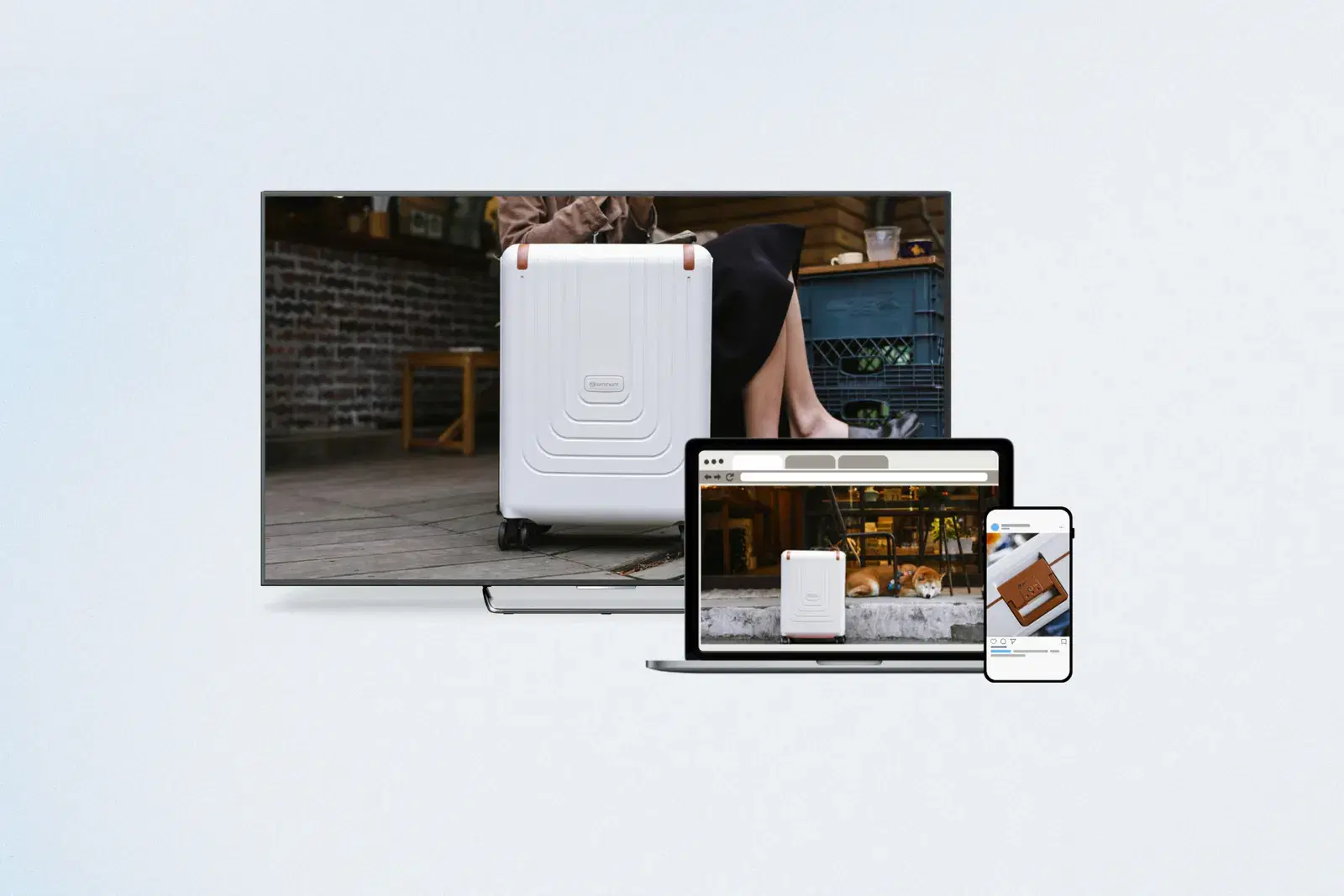
One thing matters here: do not simply crop a landscape video into vertical, or half your message ends up outside the frame. Plan the versions from the start and frame each one so the essentials stay in the centre. From a single production you get several versions: the long one for streaming, shorter cuts of a few seconds for social, plus individual stills for display ads.
That way the work on one good streaming spot pays off across your entire marketing, instead of just one campaign.
How to approach it with onescreen
With onescreen you run your spot specifically on the streaming services that fit your audience, targeted by region, age, gender and interests. Your advertising runs on the big screen, non-skippable and with full attention. If you do not have a spot yet, onescreen helps you create one, including with AI. And you then use the finished spot in exactly the same way on your website and in social media.
What connected TV is in general is explained in the overview What is CTV advertising. Which ad formats streaming offers is shown in the article on pre-roll and mid-roll. And why relevant attention counts for more than sheer reach is explored in Attention Over Reach.
Conclusion
A good creative follows a clear structure: first the problem, then the solution, then a single call to action. It is cheaper and faster to produce than ever, and with the right format it can be used across streaming, web and social. Bring these three things together and you get the most out of a single spot.
Want to run your spot on the big screen? Book a demo and we will show you the options in 30 minutes. Or get started in the Ad Manager.
FAQ
How is a good ad structured? In three steps: first a hook that names a concrete problem of the audience, then the solution with one clear core message, and finally a single call to action. The brand should be visible early. This structure matches Google's ABCD model (Attract, Brand, Connect, Direct).
How long should a streaming spot be? It depends on the goal, with 15 to 30 seconds being common. Because streaming spots are non-skippable and watched in full, it matters less how short they are than how clear and singular the message is. Better one thought that lands than many that crowd each other out.
Are AI-generated creatives good enough? Production has become much cheaper and faster thanks to AI, and according to the IAB it is smaller companies in particular that adopt it quickly. What decides the impact, though, is the structure and the message, not the tool. AI lowers the barrier, but it does not replace a clear structure.
Can I also use my streaming spot on social media? Yes, and that is exactly the point. Use 16:9 for the big screen and your website, 9:16 for Reels, TikTok and Stories, and 1:1 or 4:5 for the feeds. The important thing is to reframe each version cleanly rather than simply cropping the landscape one.