
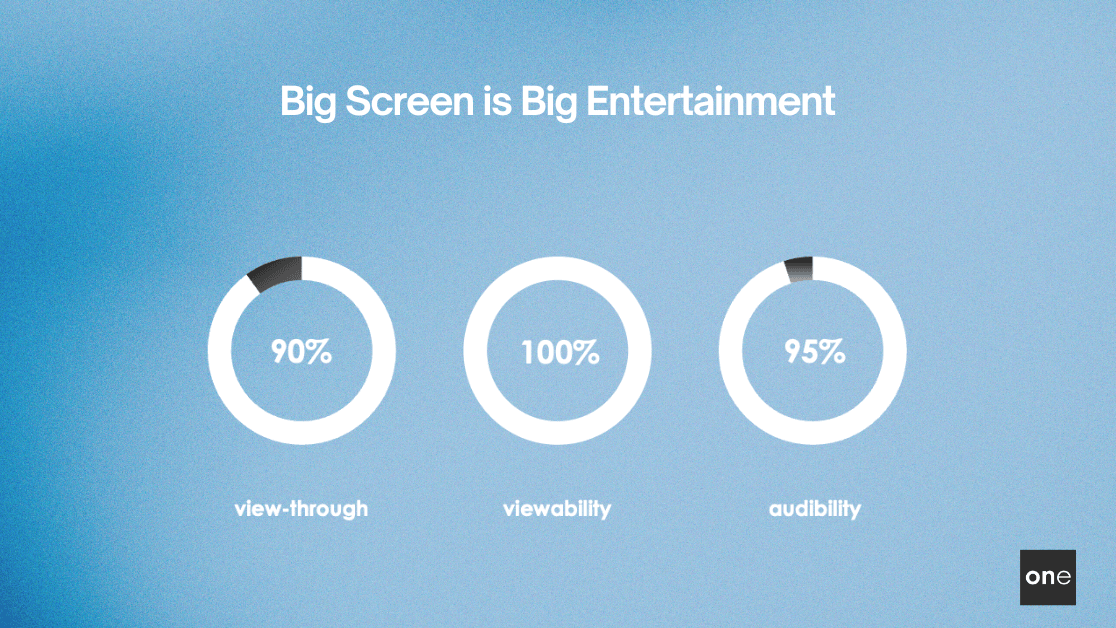
- Viewability on CTV is unbeaten, exceeding social media platforms like Facebook (12% for video) or Instagram (11% for video) many times over.
- View-through rates (VCR) of 90 to 98% make CTV the front runner among all digital advertising formats. On social media, video completion for skippable formats is sometimes below 30%.
- CTV is the only digital format that combines sound, moving image and full screen size in lean-back mode, with demonstrably high audibility and an attention score of 69.5 out of 100 (Adelaide, 2024).
- Independent measurement bodies such as DoubleVerify and IAS accredit CTV metrics to MRC standards, creating a comparability that social media has yet to deliver.
The quality problem in the digital advertising market
In hardly any other area of marketing does the gap between aspiration and reality open up as wide as in the media quality of digital advertising. Billions of euros flow into campaigns on social platforms every year, and an alarmingly large share of it is never seen, never heard and never truly noticed. The question media decision makers should ask is not only "How many impressions did we buy?", but "How many of them actually had an effect?"
View-through rates: advertising that gets watched to the end
The first decisive quality lever is the video completion rate (VCR), meaning the share of viewers who watch an ad to the end. Here the distance between CTV and all other digital formats is particularly clear.
Innovid's Global Benchmarks Report documents CTV completion rates of 90 to 98%, even for 30-second spots. A 15-second ad reaches an average completion of around 94.5%, a 30-second ad even about 96%. The reason: most CTV ads are non-skippable and embedded in premium content that the user actively sought out.
On social media platforms, the reality looks different. According to market data, skippable pre-roll ads on YouTube are skipped after five seconds in more than half of all cases. On TikTok, videos are watched for an average of only 26 seconds, ads much shorter. Facebook videos longer than 60 seconds reach a completion rate of around 52%. Even with longer formats, CTV achieves values that no other digital medium comes anywhere close to.
The attention score underlines this: Adelaide measures a value of 69.5 out of 100 for CTV, up 12 points on the previous year in 2024. Online video and display ads are far below this.
Viewability: the difference is dramatic
Viewability, meaning the question of whether an ad actually appears in the user's visible area, is the fundamental quality criterion of every digital campaign. The MRC standard defines a viewable impression for video as at least 50% of the pixels for at least two seconds on screen.
On CTV platforms this criterion is consistently met: Integral Ad Science (IAS) measures an average viewability rate of 93.3% for CTV ads, and holds this value stable over several years of measurement. DoubleVerify confirms similar values and has received full accreditation for CTV viewability metrics from the MRC.
By comparison: an analysis of over one billion impressions on Facebook and Instagram (Metric-ds.com) shows that video ads there achieve a viewability rate of just 11 to 12%. That means: of 100 delivered video impressions on Meta platforms, fewer than 12 are actually visible. The rest scroll past, do not load fully, or appear outside the visible area. A campaign that buys millions of impressions on paper reaches the user in reality only in a fraction of cases.
The reason for the superior CTV viewability lies in the nature of the medium: ads on the Smart TV run full format, on a physically large screen, in an environment where the viewer has consciously chosen to watch content. That is structurally not comparable to an auto-play video that flashes up briefly while scrolling through the social feed.
Audibility: sound as an underestimated quality factor
The quality attribute that still receives too little attention in the German media market is audibility, meaning whether an ad is seen with the sound switched on. Audibility is not a comfort KPI but an elementary factor for brand impact: the tonality, music, voice delivery and emotional effect of TV spots only unfold their power when the sound actually arrives.
On social media platforms, sound off is the norm. According to industry data, videos on Facebook and Instagram are mostly watched without sound, which is why platforms like LinkedIn and Instagram themselves recommend integrating subtitles to secure engagement. Videos with subtitles achieve up to 38% more engagement on these platforms than those without, indirect proof of how rarely sound is actually consumed.
CTV, by contrast, is a sound-on environment by definition. The user sits in front of the television with family or alone, the sound is running, the attention is focused. DoubleVerify has introduced and accredited audibility as a standalone metric for CTV, thereby measuring a quality dimension for which robust standards do not even exist yet on social media.
Conclusion: big entertainment with full attention and full volume
The numbers are clear. Connected TV does not deliver the largest reach of all digital channels, but it delivers the most reliable quality: ads that get seen. Ads that get heard. Ads that get watched to the end. In a media environment where attention is the scarcest resource, that is not a small thing. It is decisive.
Anyone who allocates media budgets by impression volume alone is giving away impact. Anyone who plans by verifiable quality, by viewability, audibility and completion rate, cannot get around Connected TV.