Media usage 2025: how the big screen reinvents itself
The German media landscape is in a phase of consolidation. After years of dynamic shifts between linear television, streaming and digital platforms, the behavior of users is stabilizing, at a high level, but with clear trends towards smart, connected usage.
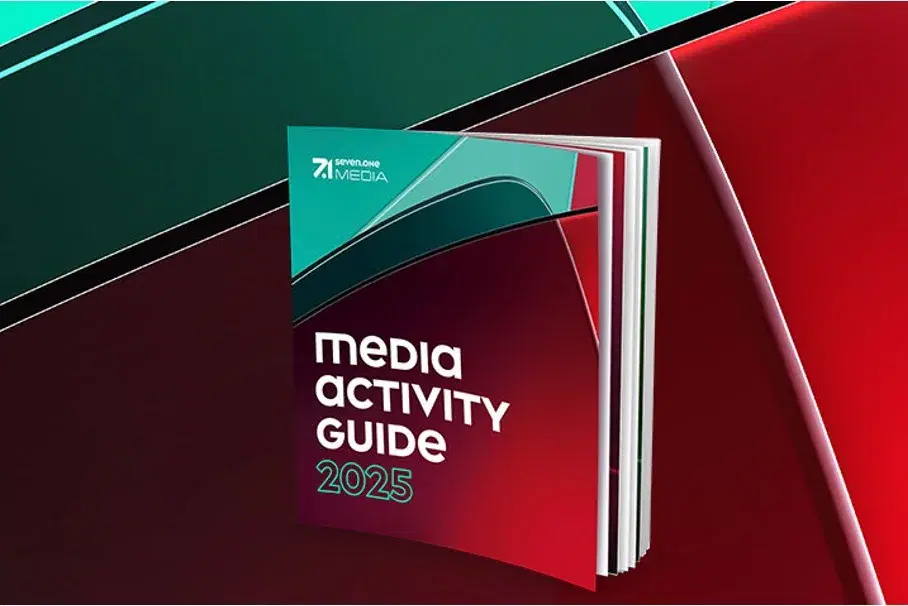
The current Media Activity Guide 2025 by Seven.One Media shows impressively how daily media time, moving-image behavior and the role of Connected TV continue to develop. The big screen remains the heart of media usage, but its character is changing: from a linear lead medium towards a data-driven, hybrid ecosystem for reach, relevance and advertising impact.
1. Stabilization after the transformation: media usage at a glance
In 2024, according to the Media Activity Guide, Germans spent around eleven hours a day with media, a value confirmed again in 2025. Usage has thus settled at a long-term sustainable level after the pandemic-related outliers and methodological adjustments (the AGF's switch to "market standard moving image").
Mass media remain the backbone
With almost nine and a half hours of daily usage, mass media continue to dominate the media repertoire, and television in particular holds its top position with a share of around one third of total media time.
In 2024, average television usage (including media libraries) was 177 minutes daily, in 2025 164 minutes, a slight decline that nevertheless falls within the range of general normalization.
Media usage becomes more diverse again
Smartphone and television remain by far the most used devices. 95% of the population use a smartphone, around 90% regularly use a TV device. The growth impulses come mainly from Smart TVs, wearables and smart speakers, while DVD players and classic radio receivers lose importance.
Advertise where people watch!
Book a demo2. Moving-image usage: consolidation at a high level
The Media Activity Guide 2025 shows: Germans spend over four hours a day with video content. Moving image thus remains the central element of their media world, broad, emotional and multisensory.
TV remains the lead medium, despite decline
Despite the multitude of new platforms, classic television has kept its dominance in reach and usage duration. 91% of 14 to 69 year olds use TV offerings linearly or via media libraries.
The average daily TV usage duration does fall slightly to 147 minutes, but television thereby remains the undisputed largest single block within video consumption. By comparison: SVoD services (Netflix, Amazon Prime Video and so on) reach 37 minutes, YouTube 31 minutes, social media videos 23 minutes and media libraries 9 minutes per day.
The video world continues to fragment, but not into chaos
The great upheaval of recent years, away from the linear monopoly towards a fragmented mix of streaming, social and on demand, is largely complete.
In 2025, stable reach shows across almost all moving-image channels:
- TV (incl. media libraries): 91%
- YouTube: 82%
- SVoD: 69%
- Social media video: 65%
Differences by age group
The age structure continues to split: while the over 50s still make up the bulk of television usage, 14 to 29 year olds show a heavily fragmented video world. In this group, TV, streaming and social media compete for attention. The big screen remains relevant even for young audiences when content, platforms and access are right. Germany thus remains one of Europe's fastest-growing streaming markets.
3. Connected TV: from additional device to standard channel
The strongest dynamic of the past two years plays out on the big screen, more precisely: with Connected TV (CTV).
The technical basis is in place
In 2024, 71% of all TV devices were internet-capable, 87% of them connected online. In 2025 these values are already at 74% and 88% respectively. Connected TV is thus standard in Germany. On average, each household has more than one Smart TV device, and more and more of these devices are actively connected to the internet. This development marks the transition from the classic "television set" to the interactive, connected moving-image hub, a platform on which linear channels, media libraries, streaming services, FAST channels and apps coexist seamlessly.
Two thirds of streaming usage via the big screen
Usage shows the same trend: two thirds of total SVoD time (67%) falls on the big screen in 2025. The smartphone remains a companion, but the TV is once again the stage.
While mobile devices dominate for social and short video, high-quality, long-form content increasingly takes place on the big screen, in premium environments, with full attention and high advertising impact.
CTV as the connection of reach and data intelligence
What makes CTV so attractive is the hybridity of classic TV reach and digital measurability. It combines the emotional strength of television, the "lean-back experience", with the targeting, tracking and optimization possibilities of the digital world.
CTV thereby becomes the central growth driver in the media mix: high visibility, strong perception, precise control.
4. Strategic implications for advertising and media planning
With the merging of linear and digital TV, a new playing field emerges that planners and brands can use in a differentiated way.
The big screen as a premium touchpoint
Advertising on the big screen remains the most effective stage for brand communication. CTV expands this stage with data-driven precision and interactive formats. Brands benefit from reach, trust and advertising impact, without the fragmenting distraction of mobile feeds.
From "TV vs. digital" to "total video"
2025 makes it clear: the separation between TV and Connected TV is outdated. Anyone who wants to understand and actively shape the entire moving-image landscape must plan cross-media, with CTV as the connecting element between reach and performance.
Targeting, measurability, impact
With CTV, new possibilities open up for addressable advertising, frequency capping across platforms and data-based impact measurement. Campaigns can be targeted more precisely, audiences addressed more granularly, without the loss of brand strength that often accompanies purely digital communication.
Media integration and user experience
The acceptance of advertising in streaming environments is growing: according to current data, 55% of CTV users find advertising "completely fine", 34% state that they buy advertised products. Decisive remains the creative quality: short, concise spots with a clear message and strong brand presence in the first seconds work particularly well.
5. Outlook: television does not get smaller, it gets smarter
The data of the Media Activity Guides makes it clear: television remains the lead medium, but its nature is changing.
The future is not "TV or digital", but TV = digital.
The audience today consumes moving image in a flexible, connected system. Smart TVs, streaming platforms and media libraries merge into a new "big screen experience". For advertising this means: reach remains, relevance grows.
Advertisers who invest early in data-driven, cross-platform moving-image strategies secure long-term advantages, in reach, perception and impact.
Connected TV stands not at the edge but at the center of this development: the new campfire of the media society, personalized, measurable and highly effective.
Conclusion:
2024 created the basis, 2025 makes it scalable.
The big screen is not dead. It is smarter, more connected and more valuable than ever.
For brands that today rely on the right combination of reach, data intelligence and creative excellence, the next phase of effective moving-image communication begins with Connected TV. Book a demo now and see how Connected TV moves your campaigns forward.
Media Activity Guide 2025 by Seven.One Media